Article updated: June 2026
As Australian businesses face increasing pressure to decarbonise while managing a volatile energy market, renewable business energy has transitioned from an elective sustainability goal to a core financial necessity. Whether you operate a small suburban retail site or a large-scale industrial warehouse, the energy transition offers a pathway to reduce costs and future-proof your business against rising grid prices.
In this guide, we explore renewable energy in Australia, the specific technologies driving the shift, and the tactical procurement strategies companies are using to reach net zero emissions.
The Business Case for Renewables
The financial logic for adopting renewable energy is now undeniable. With rooftop solar currently ranked as the cheapest source of electricity available, the Australian government and private industry alike are heavily backing a shift away from fossil fuels.
By transitioning to renewable electricity, a business may:
- Reduce operational costs: Renewables often allow companies to reduce energy expenses by 20–50%.
- Mitigate price volatility: Purchasing renewable energy through long-term contracts helps business owners avoid the sticker shock of the spot market.
- Enhance brand reputation: Both customers and investors now demand transparent emissions reporting. Demonstrating a commitment to renewables improves environmental credentials and provides a competitive edge.

Exploring Renewable Energy Resources for On-Site Generation
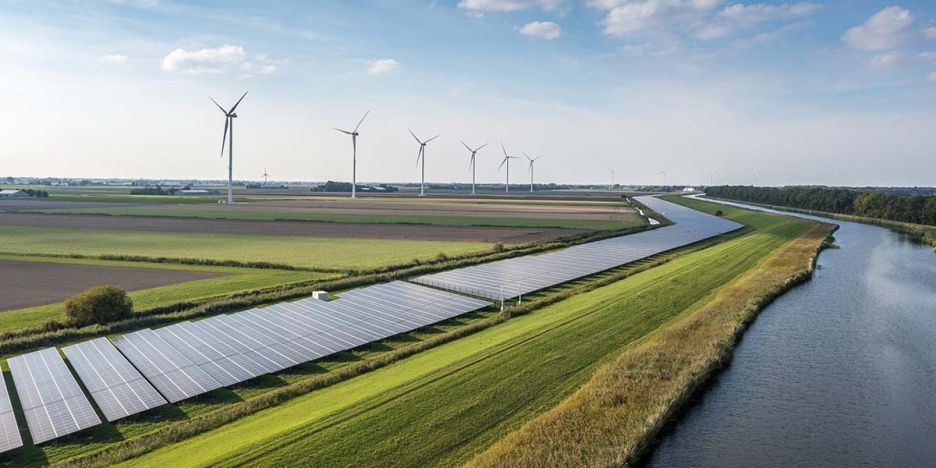
The most popular renewable energy option for Australian businesses is on-site renewable energy generation. While infrastructure and space can be limiting factors, the investment usually means a rapid payback period.
Solar PV and Energy Storage
Australia leads the world in rooftop solar adoption. Solar power is a mature technology that allows a business to generate its own power during daylight hours. To maximise the utilisation of this renewable energy, many companies are now installing energy storage solutions. Batteries allow a site to store excess solar produced during the solar sponge window (10 AM to 4 PM) for use during expensive peak evening periods.
Wind Energy
Wind is a powerhouse of the Australian grid, responsible for producing more than 30% of the renewable energy generation across the country. While few small business customers can install a turbine on-site, many large industrial sites with sufficient land resources are finding wind to be a reliable source of power supply.
Bioenergy and Emerging Technologies
Bioenergy is produced through the combustion or anaerobic breakdown of biological matter (biomass). For businesses in the agricultural or food production sectors, this offers a dual benefit of waste management and energy creation. Other advanced technologies include:
- Hydropower: A mature technology harnessing moving water.
- Geothermal: Using the earth's heat for HVAC and water heating.
- Renewable Hydrogen: Produced by splitting water molecules, acting as a clean fuel for heavy industry.
Procurement Strategies: How to Switch if You Can’t Install
A significant challenge for many small business operators is the tenant dilemma. If you do not own your building, you cannot simply install rooftop solar. However, you can still access renewable energy through clever procurement.
Power Purchase Agreements (PPAs)
A PPA allows a business to purchase renewable energy directly from an off-site source, such as a wind farm or large solar park, at a fixed rate. Well-negotiated PPAs can result in electricity bill savings of up to 40%. Given the complexity of these contracts, seeking expertise and assistance from an independent consultant is highly advised to avoid red flag clauses and hidden fees.
Renewable Energy Certificates (RECs)
For firms that cannot generate their own power, purchasing Renewable Energy Certificates (known as LGCs or STCs in Australia) allows them to legally claim that their energy use is offset by renewable sources. This is essential for accurate carbon accounting and meeting net zero emissions targets.
Green Tariffs and the "Greenwashing" Audit
Many energy retailers offer "GreenPower" programs. When taking this path, ensure the provider is actually investing in new renewable energy projects rather than just buying old, low-value offsets. Understand the difference between branding and actual renewable electricity production.
Maximising ROI: Demand Side Management
Innovative companies are adopting a comprehensive strategy that pairs renewable energy supply with demand-side innovation. Before you invest in a massive solar array, it is often more cost-effective to improve energy efficiency.
Load shifting is the practice of moving high-energy tasks—such as running heavy machinery, industrial cooling, or EV charging—to times when renewable energy generation is at its potential peak. By shaping your demand to match the solar curve, you reduce the need to buy expensive power from the electricity grid.
Government Support and Grants
The Australian government provides various grants and assistance programs to help businesses with the energy transition.
- Instant Asset Write-Off: Small businesses can often leverage this program to offset the costs of solar and batteries.
- Clean Energy Finance Corporation (CEFC): The CEFC provides unique financing solutions, allowing companies to invest in renewables at rates that are often better than standard market offerings.
Choosing the Right Renewables for Your Business
To secure the ultimate competitive advantage, your business needs more than a provider; it needs a strategic partner to navigate the complexities of the Australian energy market. Our team of renewable energy brokers specialise in transforming your electricity overheads into a managed stream of profit.
To find your best pathway to savings, let Choice Energy lead the way.
- We go beyond a simple bill review. Our team performs a deep-dive analysis of your current electricity supply and usage patterns to identify every hidden inefficiency.
- We evaluate your site potential for rooftop solar or energy storage. We ensure any investment in new technologies is sized perfectly to match your load, not just your roof space.
- We help you choose and sign an energy plan built for transparency. Whether it is a PPA or a retail plan, we lock in long-term cost stability and protect you from future market spikes.
By taking the initiative with Choice Energy today, you're securing a definitive profit advantage. The progressing decarbonisation of the Australian grid means that early movers gain the most from government grants, CEFC financing, and the lowest long-term rates.