Article updated: June 2026
Energy independence - it's a topic that has swung in and out of public focus many times over the last four decades. With the current rise in energy prices and the economic pressures accompanying them, Australian energy independence is again on our minds.
Australia imports roughly 90% of its crude oil and petroleum, holds among the lowest fuel reserves of any International Energy Agency member, and has fallen short of the IEA's 90-day stockholding obligation every year since 2012.
Stick with us as we take a closer look at the concept of energy independence as well as answer the question, is Australia energy independent?
Article Highlights
- Australia is a top exporter of coal and LNG, yet imports around 90% of our crude oil and petroleum.
- Our fuel reserves are about 37 days of petrol, 32 of diesel and 30 of jet fuel. That's well short of the IEA's 90-day requirement, which we've missed every year since 2012.
- Renewables are closing part of the gap: clean energy supplied 42.7% of Australia's electricity in the year to December 2025 and outproduced fossil fuels for the first time in Q4 2025 (Clean Energy Council).
- The federal target is 82% renewable electricity by 2030, but grid upgrades, storage and East Coast gas supply remain real constraints.
- The 2026 fuel crisis is a reminder of how exposed import reliance leaves Australian businesses; a strong case for locking in better energy contracts now.
What is Energy Independence?
At its core, energy independence refers to a nation's ability to meet its energy needs entirely through domestic production, without relying on imports. The appeal of this is clear to see - through energy self-sufficiency, we are less exposed to the price and supply risks that result from being reliant on the global supply chain.
That's what energy independence is, but here's what it isn't. It isn't about cutting economic ties or retreating from the world economy. As we'll cover next, Australia's ties to the global energy trade are vital for our own prosperity.
What Do We Import vs Export?
Australia holds a fairly unique position on the global energy stage. While we have undeniably rich natural resources - exporting them across the globe - we are heavily reliant on imports for other equally critical energy products. These imports and exports are a key part of the energy independence discussion.
Our Exports: Coal and Natural Gas
As one of the world's top exporters of coal and liquefied natural gas (LNG), much of our country's economic prosperity actually relies on us harvesting our resources and sending them elsewhere to nations such as Japan, South Korea, and China.
These exports have made us a key player in the energy security of our entire region. Striving towards energy independence could result in Australia holding onto more of these resources for use at home. But while this may secure some of our energy supply, it would also come with a serious hit to our GDP.

Our Imports: Crude Oil and Petroleum Products
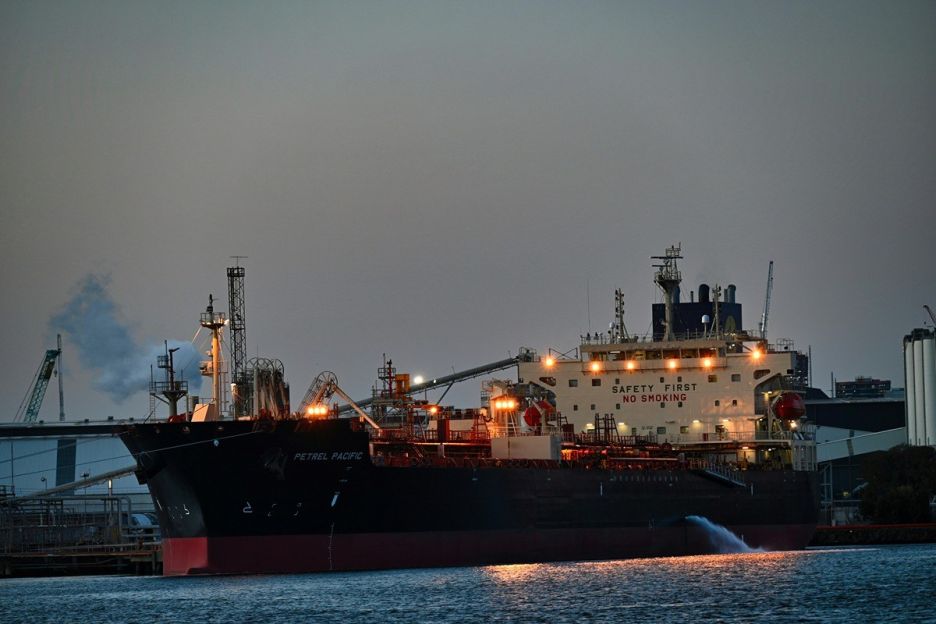
When we talk about concern for Australia's energy independence, it's really our reliance on imports that has policymakers in a cold sweat. At this stage, roughly 90% of our crude oil and petroleum products supply is imported from overseas.
But the news doesn't get better yet. Let's imagine that our ever-tumultuous world throws yet another curveball and we are cut off from the global fuel supply. If that were to happen, Australia holds a baseline stock of:
- 37 days worth of petrol in reserve
- 32 days of diesel in reserve
- 30 days of jet fuel in reserve.
After that, everything would come to a very prompt halt. You might think 'What's the big deal, that's nearly a month, right?'
Right.
Well, according to the International Energy Agency (that Australia is a member of), we're required to hold a minimum of 90 days of net oil imports. We've so far fallen short of that requirement every year since 2012. This reliance - as well as our lack of stockpiles - leaves us at the mercy of global supply disruptions and price volatility, and is the primary reason for a growing interest in energy independence.
In early 2026, conflict in the Middle East disrupted shipping through the Strait of Hormuz, the narrow chokepoint much of the world's oil passes through. The effect on Australia was almost immediate: petrol surged past $2.50 a litre, and in a single month, motorists paid well over a billion dollars more than usual at the bowser. It was a stark reminder of just how exposed our reliance on imported fuel leaves us, and a real-world version of the scenario above.
Where Do Renewables Fit Into This?
Renewable energy is a vital part of Australia's energy independence. By investing in renewable energy sources like commercial solar, wind, and hydro, we're reducing our need for imported energy sources. As of December 2025, renewables made up 42.7% of Australia's total electricity supply, with this number expected to more than double by 2030.
So, What Path Are We On?
It seems that we aren't just on one path. It's more like three or four winding paths that don't always appear to be going in the same direction.
The good news is that we are doubling down on renewables with the government setting a target of 82% renewable energy generation by 2030.
As for our coal and LNG exports, we're not showing much sign of slowing down there. This has started to come under fire as, despite having one of the largest gas supplies in the world, we're actually starting to import LNG in order to meet domestic demand in NSW and Victoria.
Australia's reliance on refined petroleum products and crude oil isn't going anywhere soon either. In fact, it appears that our reliance on these imports is rising.
What Challenges Are We Facing?
It seems that Australia is making strides towards energy independence - as well as some pretty obvious strides away from it. So what are the obstacles in our way? Here are a few.
- Infrastructure limitations: The electricity grid is in need of major upgrades to handle the increasing use of renewables. Much of this is waiting for the steady but slow improvements in battery technology that will allow us to better store renewable energy.
- Supply challenges: Despite our abundance of natural gas, certain regions - especially the East Coast - are facing potential shortages in the next few years.
- Economic pressures: Transitioning to renewables and modernising infrastructure is, in the short term, not cheap.
- Petroleum replacement: Despite the good work that renewables are doing, they don't replace petroleum as a resource, they simply reduce our need for that resource.
So, the answer to the question, 'Is Australia energy independent', at this stage is a pretty resounding no. But whether that will remain the case or not isn't clear yet.
What is clear is that it's now more important than ever to get the best energy rate for your business. Find out how you can secure your future energy supply with a free energy assessment from the team here at Choice Energy.